Blog

April Dog Training Class: 2020

We had an awesome, diverse group of dogs for April! Each of these dogs was enrolled in our distraction program, which is a three week program where the dogs learn on and off leash obedience around distractions. Let’s take a look at each of our graduates for this month.

Sebastian, Standard Poodle from Louisville, KY

Sebastian came to us for the first time when he was a younger puppy to work on manners, obedience foundations, and potty training. He came back at 6 months old to finish his training, and we are super happy with everything that he has accomplished. Sebastian has a busy household, so the ability to listen around distractions is really important for him. He also has a big, beautiful yard that his family wants to be able to enjoy with him off leash, so his off leash recalls were a big item on our list.

Ajax, German Shepherd from Lexington, KY

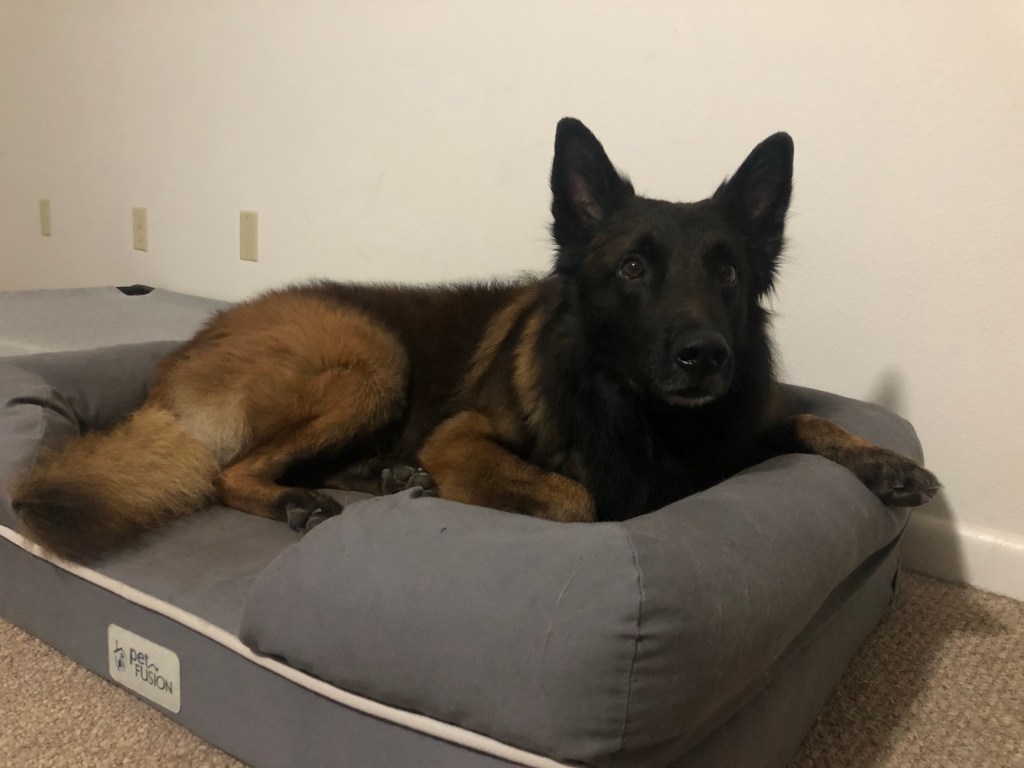
Ajax is a panda shepherd from Lexington Kentucky who was struggling with pretty severe leash reactivity. He is actually very social with dogs in off leash situations, but when on leash gets frustrated and lashes out. This is an extremely common issue with German shepherds, and we see it all the time. Teaching Ajax a solid heel command, a system of communication, and adding dog distractions to his obedience training was the ticket to giving Ajax success.

Skye, Silver Lab from Vine Grove, KY

Skye also came for an initial training week when she was a younger puppy, to work on taking food nicely, potty training, obedience foundations, and jumping. She was starting to develop some “stranger danger” reactivity, which can happen as young dogs age and go through fear periods. Skye is now back to her happy, social self, and has strong obedience to give her a bright future.

Scout, Collie Mix from Greenup, KY

Scout is a lovely collie mix who was having a few issues adjusting to having a new baby in the house. He also had some issues with leash manners, and liked to pull when on walks, and bark at the mailman when he walks up to the house. We taught Scout new skills, and a solid communication system of reward and correction, and now he is ready to go back home and tackle all of the challenges of home.

Hank, Cockapoo from Versailles, KY

Hank is a spunky young Cockapoo whose rambunctious nature was getting him into trouble. He was chewing on things that he shouldn’t have, excessively barking in the yard, and wouldn’t come in from the yard when asked. We have done a lot of work to channel Hank’s energy into more productive outlets, and to make him a more enjoyable dog to live with.

Off Breeds and Bite Sports

If you hang out in any IGP or PSA Facebook groups, you will start to see a trend. People are looking for advice on selecting an “off breed” for a biting dog sport, or for a club that will let them play. While Malinois and German Shepherds are commonplace in these sports, you will occasionally see other breeds crop up. Traditionally, Dobermans, Rottweilers, Boxers, and Giant Schnauzers have all been participants in these sports, and there are breeders today who still work to preserve the working character. Every now and then, you see something different. Somebody working their lab/cattle dog/collie in IGP protection, or trying to get a PDC with one. Some can pull it off, most can’t. They do not have the right building blocks.

“But my dog loves to tug, and loves to bite toys, and has super prey drive. He will definitely love bitework.”

This is a very common misconception, and protection sport people are partially to blame. To help people understand the sport, and to make it more palatable, people will talk about how the dog is biting an extra large tug toy in the shape of a sleeve or a suit jacket. While for many dogs this is a giant game, it isn’t as simple as a jumbo game of tug. There are pressures and challenges in these sports that require very specific traits that off breeds typically don’t, and shouldn’t, have.

The History of Protection Sports

Schutzhund is the sport that most people are familiar with when it comes to protection sports. Now known as IGP, this sport features tracking, obedience, and protection, and was designed as a breed suitability test for the German Shepherd. In order to prove that your GSD was suitable to produce offspring, you had to achieve a base level of proficiency in the sport. Just like hunt tests were designed to test labs and hunting breeds, and earth dog was designed to test working terriers. Other sports were designed to test the qualities of a working police dog, and other breeds of guardian types were developed with these programs.

Over time, these sports have developed into more of a sport than a breeding test or a police dog test. We have specific lines of Malinois for IGP, specific ones for French ring, and still others for the KNPV sport in Holland. A German shepherd who competes in the AKC show ring generally does not have the same character as a modern working bred GSD, who excels in all three phases of the IGP sport that they have been selected for.

Slight Off Breeds

After Malinois, GSDs, and Dutch shepherds, there are a couple of breeds that you will see relatively frequently in protection sports. Dobermans are probably the next most common, followed by Rottweilers, Boxers and other bully breeds, and Mastiff breeds such as the Cane Corso. You will see these dogs titling, and sometimes to high levels. Dobermans and Rotties have stood on all breed championship podiums, and there is a Beauceron with a Mondioring 3.

But there are some issues here. The selection pressures on these breeds have not been the same as the main 3 breeds. Most of these dogs that you see from reputable breeders today are being bred for the show ring or for performance sports, and there isn’t as much of a focus on the things that a protection dog needs. There are health and structure issues that can cause these dogs problems moving to higher levels of sport, especially the ringsports. So while there are some phenomenal working Dobermans out there, they are hard to come by.

Csabre, MR1 FR Brevet IPO APR3

Very Off Breeds

A border collie competed at the FCI IGP world championships, and people were all about it. It was a much different dog to see in a see of shepherds and Malinois. The performances were also much different. This is a border collie in a million to be able to take the pressure of world championship helper work, and even he could not muster a passing score.

There are a good number of breeds with Schutzhund 3 titles. Labs, goldens, a great dane, some cattle dogs and border collies. These dogs become beacons for people who want to go out and show the world that any dog can do the sport. But for every dog that you see who makes it through at the club level, there are 1,000 who would not and could not. Nor should they. When I look for a correct lab or golden, I want a handler sensitive, soft mouthed dog with exceedingly friendly character. A good retriever should not have a full hard grip on a sleeve, and they should not see stick hits as a fun cue to keep sparring. When I look for a correct herding dog, it is a major issue for them to have a death grip on a sheep. It is a major issue for them to be eager to get into fights.

Why can’t you just teach the dog to go down the field and bite the tug? Because the guy is trying to get them not to bite. Pressure is poorly understood in most dog circles, and we do not always perceive it in the way that dogs do. I can have a rock solid stable cattle dog or lab, not worried about anything, who is worried about the type of pressure that my Malinois lives to work under. It takes a very specific kind of dog to do a PSA or Mondioring attack with accessories. It takes a very specific kind of dog to bark in a dominant and powerful way for a minute straight. These things may seem simple from an outside perspective, but it’s hundreds of years of genetics that make those things happen. And for your collie, there are hundreds of years of genetics telling it something else.

FAQ: What goes into the price of a fully trained dog?

The price of our Dream Dogs does vary from dog to dog, but generally is between $10,000-15,000. This price is based on the quality of the dogs in our program, the massive amount of training that goes into them, and the other things that we provide along with the dog.

In this post, I will breakdown all of the costs associated with raising and training these dogs. Then I’ll go into more detail about what is included in each area.

Price Breakdown

Well-bred Puppy- $2500-3500

Vaccines, Preventative Care, Spay/Neuter- $1100

Training- $2000 per month (4-8 months of training is standard)

AKC Registration- $65

Microchip and Registration- $25

Equipment and Supplies- $600

5 Private Lessons- $1000

So if you were to get an 8 week old puppy, and raise them in a professional training program until the 8 month mark, you are looking at an investment of about $16,500. By comparison, our program eliminates some of your stress, extra expenses, and the headaches of raising a young puppy through potty training and teething.

Let’s examine each category in more detail.

Getting Your Puppy

Our puppies are not from random breeders, or from people producing sub-par dogs. We work with health tested parents, well socialized puppies, and dogs from solid pedigrees. There is nothing more heart breaking than raising an 8 week old puppy and falling in love, only to discover they have genetic health or temperament problems. Utilizing the right genetics eliminates that risk, and gives you peace of mind.

Veterinary Care

Our dogs receive regular veterinary care, including vaccines, deworming, heartworm prevention, flea and tick repellant, other health screenings. Our dogs all get bloodwork done before their spay or neuter to ensure that they have good organ function, and are healthy enough to go through surgery. We handle all of the recovery from the spay and neuter, and make sure that healing happens according to plan.

Daily Professional Training

This is the most expensive, most time consuming, and most valuable category. Our puppies are raised in the home of a professional trainer, and get daily training sessions. They are safely socialized with people, kids, dogs, loud noises, and new places. They are exposed to stairs, riding in cars, and things like vacuum cleaners and hair dryers. They learn on and off leash obedience, how to play fetch, and how to relax in a crate. They learn not to jump on counters or people, and to come when called. More than 100 hours a month go into their individual training.

Registrations

AKC registration is included in the price of your dog, as is lifetime registration of their microchip. Microchips are the best way to ensure your dog makes it back to you if anything ever happens where you get separated.

Equipment and Supplies

We feed top quality dog food and treats during the training process, and want dogs to get the best possible start. When dogs graduate, we send home a kit of supplies for you. This kit includes: 1 large bag of dog food, 1 crate, 1 dog bed, multiple quality toys, multiple bags of treats, a training leash, a remote collar, a regular collar and leash, shampoo, flea and tick prevention, as well as all of their paperwork.

Lessons with You

When you are ready to bring your dog home, we work with you one on one to make sure that the training transfers to you. We offer more transition training than any other company. Below are some videos of one of our graduates demonstrating how well his training transferred to his new owner.

A Smart Investment

When you get one of our Dream Dogs, you are investing in a fantastic dog to spend the next 12-15 years of your life with. A dog who will be healthy and well mannered, and a best friend you can take on adventures. You are investing in full trainer support for the lifetime of your dog, and a guaranteed healthy pet.

Contact us for an application.

Success Story: Beau the Goldendoodle

Beau is a social, happy goldendoodle from Lexington, KY. He was struggling with good manners at the door, which is a very common problem with doodles. Having a dog who loves strangers is a fantastic thing to have, but it can lead to issues with jumping and hyperactiveness. Beau also pulled badly on walks, wouldn’t come when called, and had issues with seperation anxiety.

The first step with Beau was to teach him a solid system of communication. Dogs can’t understand that a behavior is undesirable unless we have a way to communicate that to them. Beau has great food drive, so it was easy to build new behaviors with him, and introduce him to a fair system of corrections. He was conditioned to a marker system to help give him feedback with training. We also introduced him to a slip lead, and a quality remote collar from E-collar Technologies.

The e-collar makes communication a breeze with a dog who has had the right kind of conditioning. After being conditioned, we can move onto off leash reliability, and reliability around distractions. Once Beau made it through three weeks of training, including a trip to the FMBB Selection Trial in Tennessee, it was time for him to graduate. We did a few lessons with his owners to make sure that his training transferred back to his home environment.

On follow-up on Beau the other day, his owner had this to say: “Things are going good! We haven’t really had any problems. It’s funny anytime we go out on walks, you can tell he’s in the zone!”

We love updates like these, and this is several weeks after Beau graduated. People often ask if training will stay the same once the dog returns home, and the answer is yes! Our training program is designed to make sure that we are the last trainer you ever have to use.

Dream Dog Diaries: Dec 12

Polo (formerly Solo)

Polo the lab is getting ready to go to his new home in Iowa! This wonderful boy just got his hip and elbow x-rays, and everything looks fantastic. There is no better peace of mind than getting a young dog who you know is healthy both physically and behaviorally.

Polo also got neutered yesterday, so he will be all healed up and ready to start his new life by the time he goes home in January. He can’t do any serious training while he’s recovering, so he’s going to get some nice relaxing time off.

Brutus (formerly Luke)

Brutus also has a new home! He will be going home around Christmas time, and will have a great family who has an older female Boxer who will be his new buddy. We have already started on his name recognition training with his new name.

Brutus is also working this week on his sit, his place command, relaxing in the house, walking on leash, and continued socialization. He is sleeping 8 hours through the night regularly, and is an angel in his crate.

Leia

Leia is still looking for her forever home, but she’s in no rush. She’s having a blast playing with her Kong while I’m writing this blog post. Her name recognition training is going well, although she may end up with a different name when she finds her new family.

Leia is responding really well to leash training, and is sleeping 8 hours through the night with no complaints and no messes. She is learning sit, place, and wait at all of the doors. She and her brother are going to start going on a few field trips this week as well.

Cody

Stay tuned for more information about Cody, the newest dog to enter the program! We will add some more info about him later in the month.
November 27: Trained Puppy Training Diary

For some families, raising a puppy from 8 weeks is overwhelming and too risky. You don’t know what your puppy’s personality will be as they mature. You have to deal with teething, potty training, crate training, and socializing your puppy in the midst of a pandemic. Purchasing a trained puppy is the right solution for some.

Because we are a dog training facility, we have the resources and set up to still be able to provide safe and productive socialization. We get the puppies through all of their crate training and potty training stages, and teach them proper manners from Day 1. They will understand all of their basic obedience commands, and the older puppies have extensive off leash and advanced obedience work. Check out their progress through our weekly training diaries!

Solo

Solo is working hard on both on and off leash obedience. He is a very happy, social boy, so distractions from people are one of the hardest areas for him. Toward the end of today’s training video, you can see him recall away from somebody petting him. This is a big deal for a labrador! You can also see that we do Solo’s recalls when he is free and running loose in the field. We are very particular on how our recalls are trained, and reliability is super important. Real world recalls should be from a dog who can have fun with people, dogs, food, etc, and still recall away from them to come to you.

Solo is available to go home Jan 15 when he wraps up his training program. Contact us to reserve him.

Luke and Leia

The dynamic duo are such a joy to spend time with! These puppies are both very confident and outgoing, and love to meet new people. As with any social dog, it is important that they learn proper manners for greetings. Boxers are too big of a breed to be jumping all over people when greeting them. Luke and Leia are also working on learning “sit”, “wait”, “break”, and some toy retrieve skills.

But it can’t be all work and no play! They get plenty of time to be puppies, and play with each other and with some neutral adult dogs. We are super excited about watching these two grow up.

Luke and Leia are available as early as December 23 as graduates from our trained puppy program. They are also eligible to stay longer and complete more advanced training.

Littermate Syndrome, and How to Handle It

LITTERMATE SYNDROME IS A PHENOMENON THAT OCCURS WHEN YOU GET TWO YOUNG DOGS AT THE SAME TIME.

They don’t have to be actual littermates, but just dogs who grow up together at the same time, in the same house.

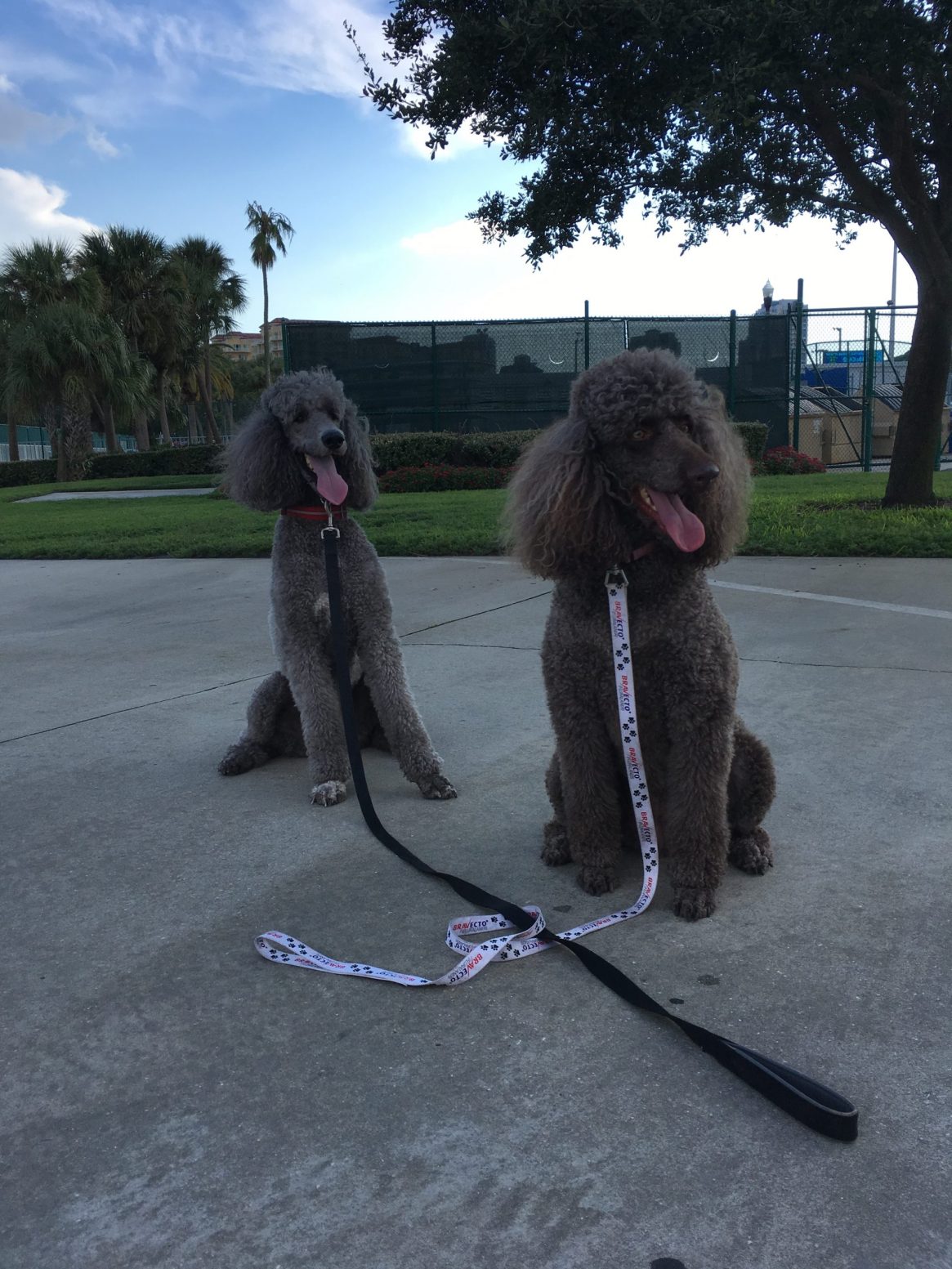
Pair of standard poodles

Puppies need 8-10 weeks with their mother and littermates to learn vital information. They learn how to play, how to make friends, how to give corrections, and how to accept them. Once they’ve learned these skills, they go off to their new home to bond with their new family.

But what if that new family includes another puppy? Puppies love to play every waking minute, and nothing is more fun than another puppy. Your new additions will have more fun interacting with each other than they do with you, and that is a recipe for disaster.

Those critical first months home should be filled with fun interaction with you and your family. Any dog interactions should be with neutral, safe adult dogs, or occasional play sessions with other puppies. You should be the center of your dog’s universe, and not any other dogs.

In addition to learning to love dogs more than you, your puppies learn to be very co-dependent on each other. If they are together for the majority of the time, it will create major stress down the road when they are separated. This will make boarding tough, make groomer trips a nightmare, and make the vet an extremely unpleasant prospect.

Believe it or not, littermate syndrome can also lead to very serious aggression problems. Because the puppies don’t get enough time apart, their fuses get shorter and shorter. It isn’t uncommon for me to get a call from people who had two puppies who got along until 6 months or so. Upon hitting a more mature age, these puppies start fighting, and fighting badly. Due to the reasons listed above, this is also a very challenging thing to stop once it starts.

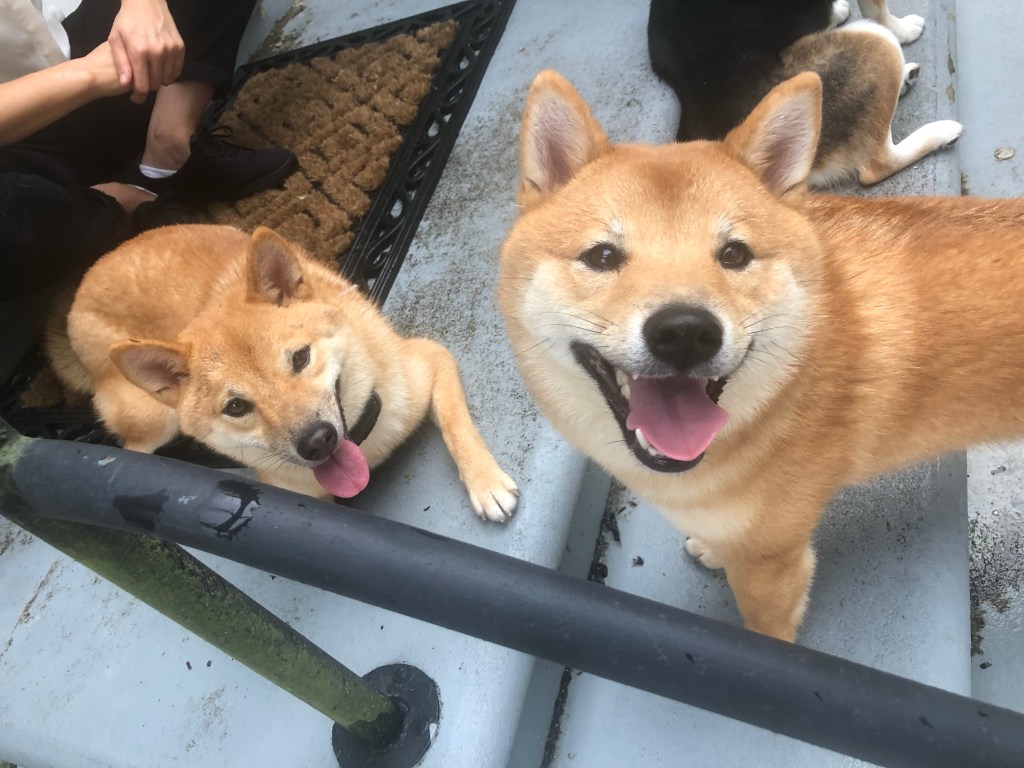
Shiba Inu siblings

BUT I ALREADY HAVE TWO PUPPIES!

Littermate syndrome doesn’t have to be an absolute thing for your puppies. There are some key things that you need to do to ensure that you avoid fallout from raising two puppies together.

-Give your puppies regular time apart from each other, both in the house and outside. Keep crates far apart, and do potty trips separate.

-Walk the puppies separately, and do any socialization or field trips separate as well. A nervous puppy can gain false confidence from a more confident puppy, or it could backfire the other way. Dogs are all individuals, and need individual training time.

-Make sure that both puppies get lots of mental and physical stimulation. Playing with each other doesn’t count.

-Hand feed your puppies for training until they are at least 6 months old. This will build tons of motivation to work with you and interact with you.

-Make separate vet trips and groomer trips, or alternatively have each family member handle a different dog.

-If you notice any of the behavior issues discussed above, contact a trainer ASAP to address the problems.

LITTERMATE SYNDROME CAN CAUSE YOU A LOT OF GRIEF, BUT IT DOESN’T HAVE TO.

Set your puppies up for success, and be prepared for the serious commitment that it takes to raise both puppies correctly.

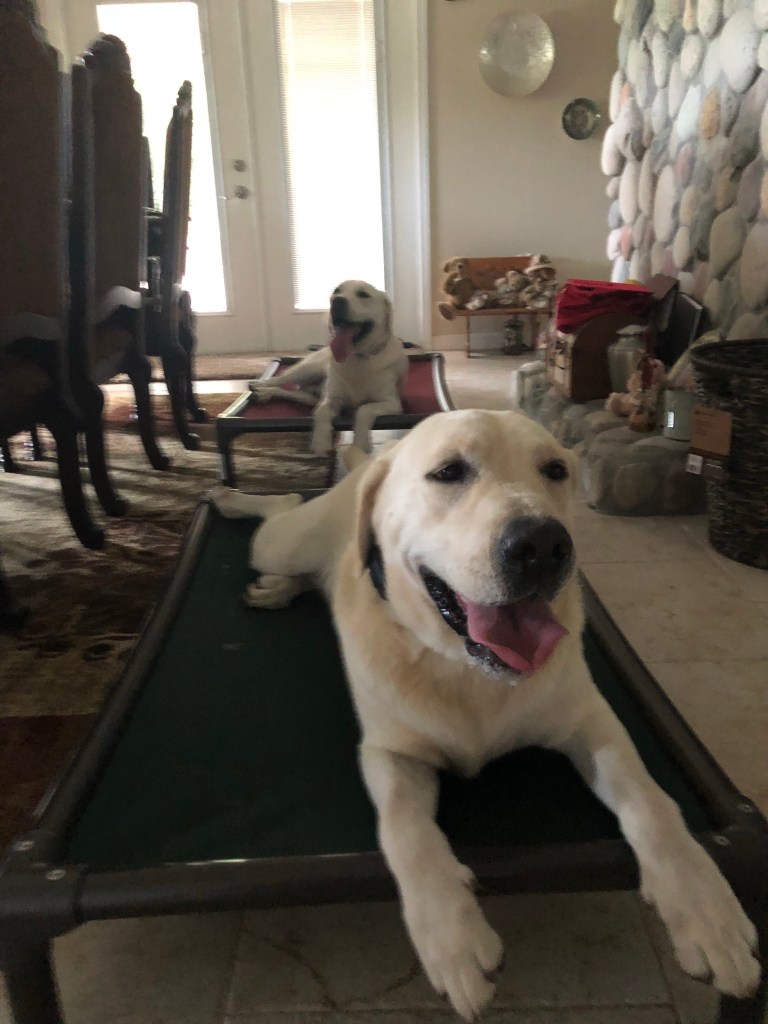
White creme labs

The Fourth, Fireworks, and Fearful Dogs

FIREWORKS CAN BE VERY SCARY TO YOUR DOG.

EVEN A DOG WHO IS NORMALLY VERY CONFIDENT CAN STRUGGLE WITH THE UNEXPECTED LOUD BANGS AND FLASHES OF FIREWORKS. SADLY, EVERY YEAR THERE ARE THOUSANDS OF DOGS WHO GO MISSING ON THE 4TH OF JULY WHEN THEY TRY TO FLEE FROM THE FIREWORKS.

Maybe your dog has a history of issues with fireworks, or maybe this is their first year showing signs of problems. Noise sensitivities are something that can develop later in life, so don’t be surprised if your dog suddenly develops a phobia during the 4th of July. Fortunately, there are a few things that you can do to keep your dog safe and comfortable during the festivities.

dog firework anxiety
  • Walk your dog early in the day, and give them plenty of exercise before fireworks start. Exercise should be on leash, because the occasional person may start setting fireworks off early, and you should be prepared if your dog gets spooked. Providing exercise earlier means you won’t be having to take your dog out later in the evening, and your dog won’t have excess energy when things get started.
  • Have a safe, quiet place for your dog to go to. This could be a laundry room or bathroom, or could just be their crate in a low traffic area. You can cover their crate with a blanket or towel to provide them with more security.
  • There is a lot of misinformation floating around about reinforcing fear with food, praise, and attention. Let’s set the record straight. Giving your dog lots of petting and attention when they are freaked out is detrimental, and should be avoided. Giving your dog “busy” toys stuffed with food is great, and should be something that you use to help your dog out.
  • When our dogs get frantic, and we start petting them, a few things happen. First of all, your petting is likely to be perceived as frantic to them, and make them even more worked up. You can create far more anxiety and stress this way. Saying “It’s okay, it’s okay” makes you feel better about the situation, but it does absolutely nothing for your dog.
  • Stuff Kongs and other interactive toys with high value food earlier in the day, and freeze it. You can use peanut butter, pumpkin mixed with kibble, or even just soaked kibble. Bully sticks, meaty bones, and other high value , interactive objects are also a great choice. Give these to your dog in the evening to give them something to keep them occupied. If you already know that your dog is going to have issues, put them in their safe spot that you created, with their interactive item, and leave them alone.
  • You can play the radio, the TV, or other background noise to help drown our the fireworks. Start the TV or radio before things start happening.
  • Under no circumstances should your dog go outside alone, or without a leash. Dogs escape fences every year on the 4th, and you shouldn’t assume that your dog won’t become a statistic.
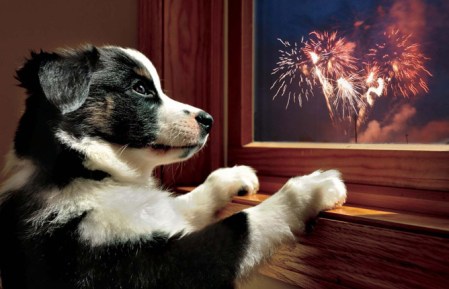
  • NEVER take your dog to a fireworks show or similar event. It’s fun for you, but it isn’t fun for them.
  • Make sure that your dog’s tag or microchip information is updated, and that you have a recent picture of them. If you follow the tips above, it shouldn’t be an issue, but it is always wise to be prepared for emergency situations, such as someone leaving the door open, etc. If your dog is prone to door bolting, seek out training, and also look into GPS collars like Tractive.

Expect some fireworks during the next day, and the next few nights. Keep up with the tips listed in this article, and keep your dog safe.If your dog is destructive, panicked, or has otherwise extreme behavior with loud noises, you should consult with both your veterinarian and a professional trainer to develop the best game plan for your individual dog.

The Myth of the Big Backyard

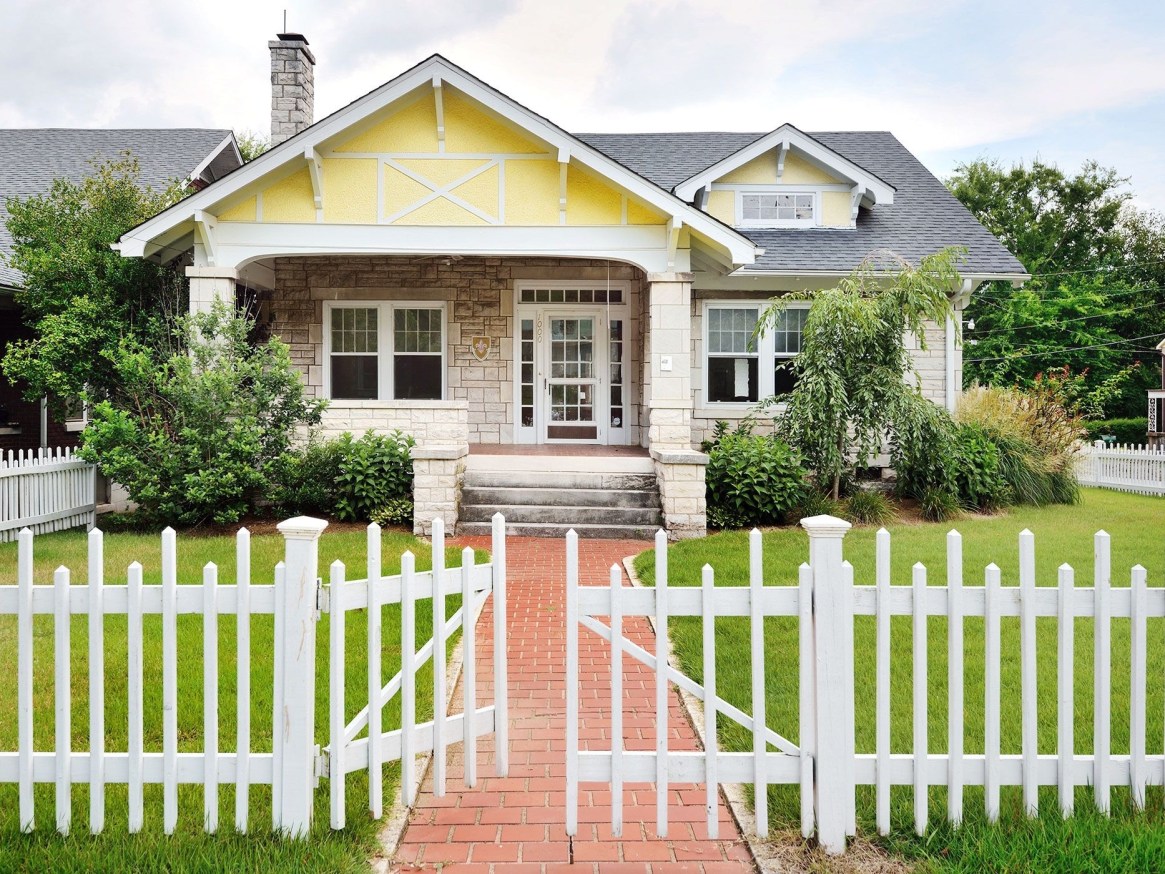
Think of the stereotypical American dream. Picket fence, golden retriever playing in the yard with the kids. A big back yard, with plenty of lush, green grass. It’s this beautiful, Hollywood-created fantasy that everyone can picture in their mind.

That big backyard isn’t just part of this fantasy home. It’s a thing that many people think is the key to their dog’s happiness. People shop for houses with a fenced yard for their dog, and some rescues won’t adopt to homes without a fenced yard. People who are struggling with out of control dogs often think the yard is their salvation.

“He’s only acting aggressively because he’s cooped up in this apartment. If he had a big backyard to run around in, he’d be okay”

“She’s got so much energy and pulls me everywhere. She just needs to go live on a farm where she can run around.”

“He’s so destructive, and we can’t handle it anymore. We’re building a fence so that he can spend more time in the backyard”

I hear person after person say these things. The backyard is the magic button for behavior issues. It’s an excuse for severe aggression problems, it’s an excuse for separation anxiety, and it’s all totally wrong. The backyard is not going to magically solve your dogs problems. It isn’t a babysitter for your dog, and it isn’t required for them to have a happy and fulfilled life.

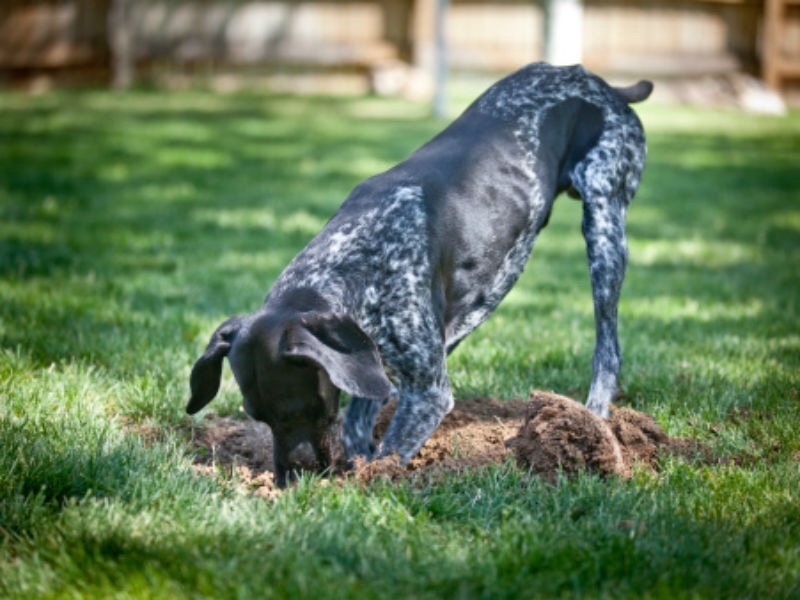
People who use the backyard as a bandaid for behavior problems are usually creating even more issues. Bored dogs in yards dig, jump fences, fence fight with neighbor dogs, kill squirrels, and all kinds of other behaviors. A dog who is bored in your house when left to their own devices will be just as bored in your backyard.

I am certainly not suggesting that dogs don’t enjoy yard time, or that free running isn’t very important to them. Yards are great. But they aren’t going to fix any of your problems. Plenty of people living in apartments and condos have well adjusted, fulfilled dogs. These dogs are getting what they need, and have owners who make it happen.

I lived in a 3rd floor apartment with a working breed for 10 months. He was a young dog, an active dog, and the quintessential “he should live on a farm” dog. Well he doesn’t have a farm. He has an owner committed to taking him out multiple times a day to work with him, keep him busy, and make sure that every one of his mental needs is met. That 10 months of apartment living didn’t result in any change in his behavior because I didn’t allow it to.

Rather than buying yourself a picket fence, commit to spending one hour a day working with your dog, 7 days a week. Take an honest look at your dog’s life, and look at what is missing.

  • Does your dog ever get to leave your property?
  • Does your dog get enough interaction with you?
  • Is your dog mentally stimulated during the day?
  • Is your dog physically stimulated during the day?
  • Do you have a high energy working breed that needs a job? Have you given them a job?
  • Are you giving your dog any structure and leadership?

There are so, so many things that lead to behavioral issues. Your lack of a backyard isn’t one of them. Work with your dog, seek out help if you don’t know how, and don’t let your yard be the reason why your dog doesn’t thrive.

Best Places to Hike with Dogs in Louisville, KY

WHAT ARE THE BEST PLACES TO HIKE WITH DOGS IN LOUISVILLE, KY?

Louisville and the surrounding suburbs are full of great parks and trails to enjoy with your dog. There are hiking areas available for every skill level, and enough variety to keep things fresh and interesting. Hiking is tremendous exercise for both you and your dog, and also provides your dog with good mental stimulation. Most dogs never leave their home neighborhood, which is a boring way to live their life. Hiking gives them a chance to see new things, and explore places that they have never been before.

We have personally visited every single park on this list, and frequently utilize these areas to train and exercise our board and train dogs while they stay with us. Our own personal dogs also love spending time on the trails! In order, here are our favorite places to hike in Louisville with dogs.

1. JEFFERSON MEMORIAL FOREST -11311 MITCHELL HILL RD, FAIRDALE, KY 40118

Jefferson Memorial Forest is a vast area of wilderness, and is so big that I think it might be impossible to explore it all. Most of the trails are fully shaded, so hiking in the summer is possible even when it gets to be very hot outside. You will share the trails with people on horses and bikes, but the park is so big that foot traffic gets spread out. Parking is plentiful, and picnic tables are available in some sites.

If you are a fan of water, there are several creeks and other bodies of water that flow through the park. Fishing opportunities can be found if that is something you want to add to your experience. The park is outside of the city in Fairdale, but still within very easy driving distance of all of Louisville.

2. THE PARKLANDS/TURKEY RUN PARK-13657 SEATONVILLE RD, LOUISVILLE, KY 40299

This incredible park system is one of my favorite places to hike in the state. The scenery here is nothing short of spectacular. Deer, rabbits, and birds are everywhere in the park, and are a welcome sight on the trails. There are trails available to both pedestrians and cyclists, and some of the best bathroom facilities that you will see at a public park. Kayak areas are present in the park, and are easily accessible. Parking is a breeze, and you have plenty of paved trails for hiking in inclement weather.

The Parklands have some trails that are pretty mild, and easy for hikers. Others pose more of a challenge, and there is a big selection of trails for you to choose from. This park is a little out of the way, but well worth the trip

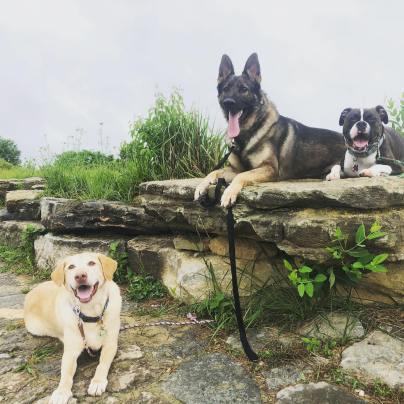
the parklands dogs

3. IROQUOIS PARK-2120 RUNDILL RD, LOUISVILLE, KY 40214

Known as “Louisville’s Yellowstone”, this park is located in the heart of South Louisville, and is very easy to reach by main roads. When you get onto the trails, you would never know that you were in the middle of a busy metro area. The accessibility is one of the reasons why this is a top place to hike with dogs in Louisville, KY. There are paved trails all around the park, with dirt trails that branch off. This is a busy park for mountain bikers, disc golfers, and equestrians.

This park is one of the busier options, and so be prepared to walk further from parking to the trailhead. The trails themselves are largely shaded, so are a good option for summertime hikes. The view from the top of the hill is incredible, and well worth the hike up to the top.

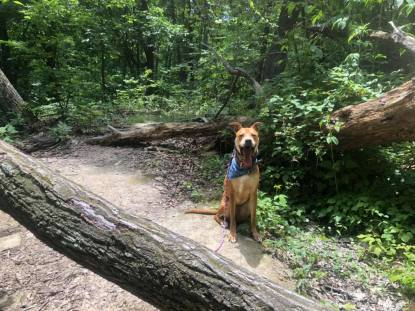
iroquois park with dogs

SAFETY WHEN HIKING WITH DOGS

  • Always bring plenty of water for both you and your dog.
  • Bring a charged cell phone with you, and let someone know where you are going to be.
  • Familiarize yourself with trails and maps before you head out.
  • Make sure that you and your dog have flea, tick, and mosquito prevention, and check for ticks after the hike.
  • Monitor your dog closely when temperatures are very high or very low. Some breeds are more tolerant of extreme temperatures than others. For example, your husky might thrive when its snowy and cold, but be a bad candidate for summer hiking.
  • Do not let your dog drink from creeks and puddles, as these can be a source of girardia, leptospirosis, and other microorganisms.
  • Do not let your dog off leash unless the park allows off leash dogs, and unless you know that your dog has a reliable “come” command. If you need help in this area, we can help build off leash reliability for your dog.

If you will be having your dog swim on the hike, check out our water safety tips.